





X Close

Anti-American populism is sweeping through Eastern Europe

September 8, 2023 - 10:00am

Ukraine faces decisive months ahead as key allies gear up for crunch elections. While early presidential campaigning in the US and a looming general election in Poland will grab the international headlines, a snap election in Slovakia on 30 September may prove every bit as consequential. 

With Robert Fico Slovakia’s former prime minister and one of the West’s most outspoken critics of the Ukrainian war effort poised to win the vote, a change of government in Bratislava could have a profound effect on EU policymaking. Fico has promised that if his party makes it into government “we will not send a single bullet to Ukraine,” proudly proclaiming that “I allow myself to have a different opinion to that of the United States” on the war.  

Fico has also claimed on the campaign trail that “war always comes from the West and peace from the East,” and that “what is happening today is unnecessary killing, it is the emptying of warehouses to force countries to buy more American weapons.” Such statements have resulted in him being blacklisted by Kyiv as a spreader of Russian propaganda.  

Yet the former prime minister spearheads a new brand of Left-wing, anti-American populism that has become a powerful force in Central Europe since the war began. Perceptions that “the Americans occupy us as one MP in Fico’s Smer party evocatively put it are shared with a similar groundswell of anti-Western opinion in the neighbouring Czech Republic.  

Yet Smer has been handed a chance to gain power thanks to the chaos which has engulfed Slovakia’s pro-EU, pro-Western forces. Personal grievances coupled with serious policy errors tore apart a four-party coalition formed after elections in 2020, leaving Fico to capitalise on heightened mistrust in establishment politics. Smer is expected to become the nation’s largest party after this month’s election, with an anticipated 20% of the vote.  

Whatever the specific makeup of the new government, if Smer is the largest party it will likely pursue a foreign policy similar to that of Viktor Orbán’s government in Hungary. A halt to until-now generous Slovak arms shipments to Ukraine is Fico’s central electoral pledge, while the arrival on the scene of another Orbán-style government prepared to obstruct EU aid efforts for Ukraine would create a serious headache. That is particularly the case as Brussels struggles to win support for both short and long-term war funding commitments. 

Victory for Fico would also amplify Orbán’s scepticism about the overall Western narrative on Ukraine a scepticism which the Hungarian Prime Minister recently conveyed to Western conservatives during an interview with Tucker Carlson. Orbán portrayed Ukraine’s attempts to win back the territories taken by Russia as ultimately hopeless and claimed that Donald Trump’s promise to end the war quickly makes him “the man who can save the Western world”. 

Like Trump in America and Orbán in Europe, Fico is hated with a passion by establishment forces. But in Slovakia, the pro-Western establishment itself has become so mistrusted that power may soon pass to a man intent on shattering what’s left of European unity on Ukraine. 

William Nattrass is a British journalist based in Prague and news editor of Expats.cz


Join the discussion


Join like minded readers that support our journalism by becoming a paid subscriber


To join the discussion in the comments, become a paid subscriber.

Join like minded readers that support our journalism, read unlimited articles and enjoy other subscriber-only benefits.

Subscribe
Subscribe
Notify of
guest

35 Comments
Most Voted
Newest Oldest
Inline Feedbacks
View all comments

Scotland is making a dangerous bet on medical cannabis

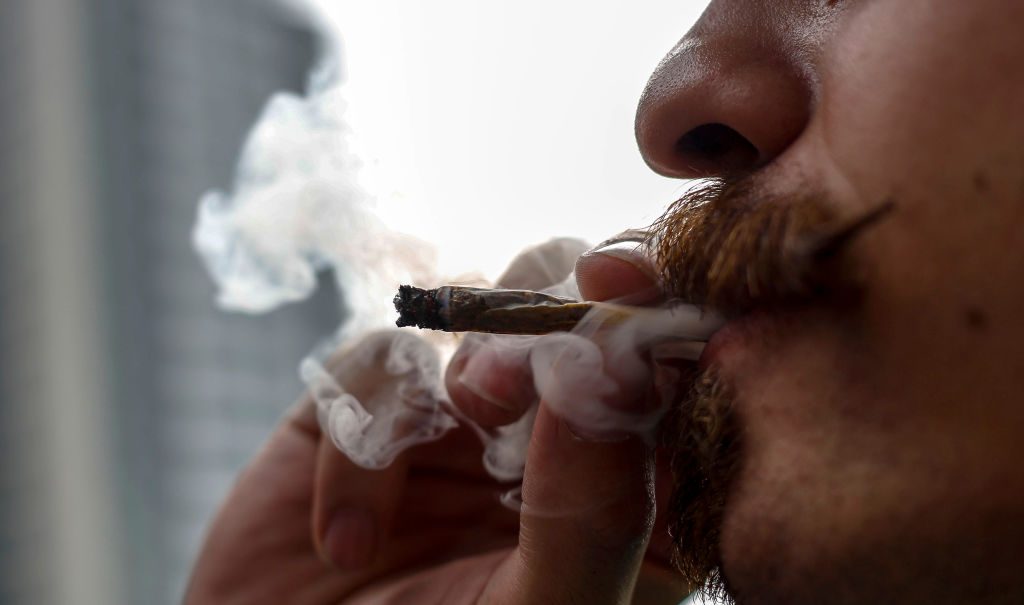
Destigmatisation has its downsides. Credit: Getty

Destigmatisation has its downsides. Credit: Getty

December 18, 2025 - 10:00am

Britain’s medicinal cannabis industry is predicted to be worth over half a billion pounds by 2029, and is expanding wherever marijuana consumption is decriminalised. That and most other drugs have been effectively decriminalised in Scotland, so it’s not surprising that a Sydney-based multinational, Breathe Life Sciences, is expanding into the country with a factory making medicinal cannabis products. It promises to employ up to 100 people in a new plant located in Melrose in the tranquil Scottish Borders.

In recent years, cannabis has been widely puffed in the media as the latest wonder drug, a salve for all ills. Many take it for chronic pain, while others use it to ease discomfort arising from conditions such as epilepsy and multiple sclerosis. Others just take it for fun.

Concrete evidence for the drug’s medical effectiveness is hard to find, but there is a considerable cultural investment in cannabis being not just safe but positively beneficial. At least that seems to be the view of the Scottish government. Cannabis remains a controlled drug in Scotland, but police rarely prosecute those in personal possession and medical cannabis has been fully legal since 2018. In 2021, the Lord Advocate, Dorothy Bain, announced that police should not prosecute those in possession even of Class A drugs such as heroin, turning Scotland into a hard-drug tolerance zone.

It is often difficult to determine whether medical cannabis is being consumed purely for medical reasons, or for recreational purposes, or both, since it is taken essentially for relaxation and mood enhancement. But most clinicians seem to think it is low-risk.

However, Scotland is not a country which has had a positive experience of substance decriminalisation. It notoriously has the worst drug death rate in Europe, mainly from the abuse of benzodiazepines (“street benzos”) and heroin. Three times as many Scots die of drug abuse as English people. In response to the problem, Glasgow earlier this year opened a “safe” consumption room. There are no accounts yet of substantially decreasing drug abuse, but locals have reported drug paraphernalia littered in the streets and an increase in addicts in the area.

It is not easy to isolate the effects of cannabis, because it is often taken as part of a cocktail of drugs by so-called “polydrug users”. But buried in the statistics there are signs of an increasing rate of psychotic disorders arising from cannabis use. Public Health Scotland says the rate of hospital stays from cannabinoid-related conditions has increased roughly eightfold over the past 25 years. The Scottish Mental Health Census 2024 detailed that cannabis is now the most common substance used by psychiatric inpatients who report using drugs. Figures collated from Public Health Scotland appeared to show that, in 2023, cannabis was a greater cause of psychiatric hospital admissions even than opioids.

These are generally young people buying street cannabis, of course. The owners of Breathe Life Sciences insist that its own cannabis products are rigorously tested, quality assured, “and of course fully legal”. These products can only be purchased with a prescription and do not appear in Edinburgh’s “head” shops along with the bongs and Rizla papers.

The evidence for the effectiveness of medical cannabis is mixed, to say the least, and is still based on small-scale studies and anecdotal evidence. The lack of randomised clinical trials, nearly a decade after medical cannabis was legalised in Scotland, has worried many clinicians and even advocates of legalisation.

It is reasonable to worry that the wider use of medicinal cannabis, combined with decriminalisation, is leading to a much broader acceptance of the drug generally by people who think it is entirely safe. Indeed, it is hard to avoid the reek of pot in areas such as Glasgow’s bohemian West End. The Scottish government, however, is always anxious to be at the leading edge of progressive policymaking and has been pressing Westminster to follow its lead and fully decriminalise cannabis and harder drugs. The main thrust of Scottish drug policy is to “de-stigmatise” the drug user, rather than criminalising them.

Naturally, Breathe Life Sciences has received a government grant of £350,000 and a loan of half a million for its happiness factory. Taxpayers can only hope these funds are well spent, and not more public money vanishing in a puff of smoke.


Iain Macwhirter was political commentator for The Herald between 1999 and 2022, and is the author of Disunited Kingdom: How Westminster Won a Referendum But Lost Scotland. He was Rector of the University of Edinburgh from 2009-12.

iainmacwhirter

Join the discussion


Join like minded readers that support our journalism by becoming a paid subscriber


To join the discussion in the comments, become a paid subscriber.

Join like minded readers that support our journalism, read unlimited articles and enjoy other subscriber-only benefits.

Subscribe
Subscribe
Notify of
guest

0 Comments
Most Voted
Newest Oldest
Inline Feedbacks
View all comments