








October 19 2026 - 7:00am
Paris
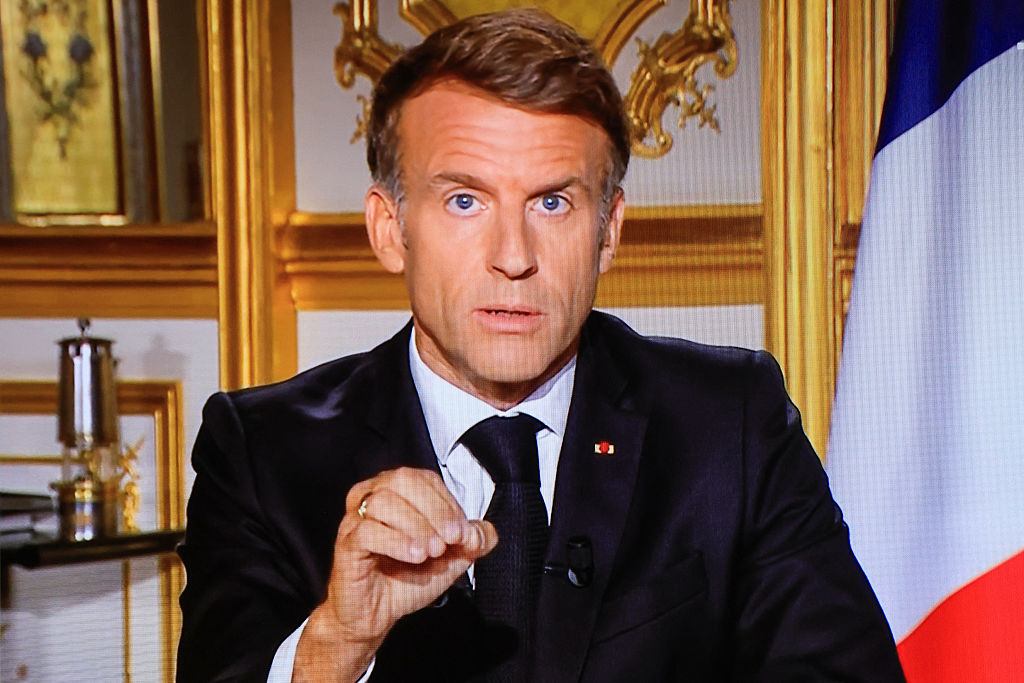
In his first major speech since protests and riots swept France, Emmanuel Macron struck a defiant tone yesterday evening. Blaming an unholy alliance of “factious far-Left groupings” and youth “delinquents” for plunging the country into chaos, the President showed little inclination to accept responsibility. His terse, eight-minute address offered no material concessions to protesters, instead proposing to give police chiefs greater powers to ban demonstrations. The government appears ready to double down on a strategy that has already resulted in thousands of arrests.
Sunday’s address also continued the blame game that has consumed France’s political class since the student protests began. For the Right, the unrest — including spectacular acts of vandalism such as the burning of school buildings and the destruction of the Limoges Town Hall — is the work of Leftist provocateurs, above all Jean-Luc Mélenchon’s La France Insoumise. Progressives, meanwhile, blame France’s heavy-handed policing for fueling the unrest, pointing to thousands of young people held in arbitrary detention and countless others maimed by rubber bullets and stun grenades.
The crisis escalated again on Saturday, in a new bout of national demonstrations. With around 800,000 people taking to the streets, the young joined forces with so-called Yellow Vests, who revolted over a proposed fuel tax during Macron’s first term. It’s a reminder that this month’s revolt is as much a verdict on Macron as it is a response to the more proximate causes, such as a decaying public education system. His failure to revive a perennially stagnant economy — with a budget deficit now at 5.4% of GDP — has inspired a great deal of fury.
One conviction seems to bind the protesters: hatred for a lame-duck president, whose two terms in office are reaching their fitting denouement. Throughout the weekend, chants of Macron démission! (“Macron, resign!”) could again be heard up and down Parisian boulevards. His authority has been shattered.
When Macron became president in 2017, he set out to remake French politics from the neoliberal center, promising a third way between the “extremes” on the nationalist Right and Left. Yet since his disastrous decision to dissolve the National Assembly in 2024, the President has presided over the very fragmentation that makes governing so difficult. France is now paralyzed between three warring ideological blocs.
“We’re six months from a presidential election,” Macron said on Sunday evening. “Anyone who explains that the emergency requires taking to the streets, protesting, and spreading disorder has only one goal: to debase the Republic.” Yet with government ministers warning of a possible fiscal rout in the bond markets, it is clear that economic factors are driving this unrest — and leaving the country with little room to react.
The anger boiling over in the twilight of Macron’s presidency reflects a deeper polarization that even a wholesale reshaping of the political landscape may do little to resolve. Macron’s time in office may be coming to an end, but the cries of démission directed at his unfortunate successor are almost audible already.