




Credit: Sean Rayford / Getty





Francis Fukuyama is both one of the luckiest and unluckiest writers working today. His luck is that, in 1992, he published one of the most widely referred to books of recent decades. His bad luck is that almost nobody read it. Even among those who did read it – or professed to read it – a distinct number went on to demonstrate that they had nevertheless misunderstood it.
The End of History and the Last Man is an extraordinary work of political and philosophical scholarship. Its scope, depth and detail would have made it an exceptional work in any era. But like the book with which it is often paired (Samuel Huntington’s Clash of Civilisations), its virtues have been lost in the quarter of a century since it came out. Like Huntington, Fukuyama’s title suggested a misleadingly simple thesis. And like Huntington it did not in fact advocate what it was accused of advocating.
To this day, people who have never read beyond the title of either book will argue with what they imagine to be Fukuyama or Huntington’s thesis. Both authors continue to be cited in innumerable radio programmes and op-eds, with people seizing either man’s thesis to set up a fallacious-point that they can then bravely refute.
There have, of course, been more enlightening criticisms of Fukuyama’s work. The most persuasive being that the book contains a slight misreading of Hegel which Fukuyama had picked up from the brilliant but troubling Alexandre Kojeve. And after a quarter century being misread, it does seem possible that Fukuyama has come to realise that there is room for misinterpretation in his first book; he has spent recent years concentrating on rewriting elements of that thesis in two considerable books The Origins of Political Order [2011] and Political Order and Political Decay: from the industrial revolution to the present day [2014].
Between such deep and substantial works, Fukuyama has a tendency to turn out shorter, slighter works. Hence The Economist is – as it is so often – slightly wrong in its summary of Fukuyama as quoted on the dustjacket of this latest book. It is not the case, as the organ claimed, that Fukuyama is the “glorious exception” to the basic rule that in intellectual life, “celebrity destroys quality”. During the 2000s, in particular, Fukuyama’s oft-citedness most certainly damaged the quality of his work. State Building [2004] was a slight and hastily-produced. It seemed almost to be a symptom of the problem it was aspiring to address. America at the Crossroads (published in the UK as After the Neocons) [2006] was little more than an act of distancing: possibly politic; personally useful; but far from glorious.
His new book, Identity: contemporary identity politics and the struggle for recognition, is another of these slighter works, but one which is still more significant than most churned out these days. In it, Fukuyama attempts to address some of the questions which many people have spent the last two years trying to consider: namely ‘why do people keep voting the wrong way?’
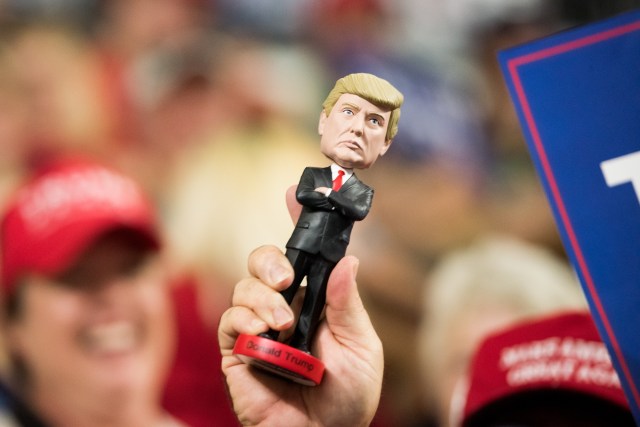
Fukuyama would not put it so crudely or crassly of course. Still, his work is an attempt to grapple with the rise of political instincts that are not his own. Much of this can write itself, and has done so elsewhere many times. Donald Trump appears in the book’s first sentence. Vikor Orban pops up on the third page, and Brexit arrives, inevitably, just a few paragraphs later. For Fukuyama the Trump and Brexit votes were a particular disappointment, suggesting to him as they did that the two countries which led what he calls the “neoliberal revolution” under Reagan and Thatcher were now “turning away toward a more narrow nationalism”. To his credit, Fukuyama tries to understand why something he abhors should have happened. And he has typically Fukuyaman explanations.
He sees these movements as part of the battle between what the Greeks termed ‘thymos’ (the part of the soul that craves recognition of its own dignity); ‘isothymia’ (the desire for recognition for being ‘on an equal basis’ with other people); and ‘megalothymia’ (the desire to be reckoned superior to others). This is good, and is itself superior stuff. Perhaps among the host of Trump and Brexit books Fukuyama would be justified in feeling a degree of megalothymia of his own. But within the space of just another page (this is still only the preface) Fukuyama has already moved on to equating the US President with “Caesar or Hitler or Peron”. Which is a point not deserving of a great amount of recognition or dignity. The fact that this preface concludes with the sign-off “Palo Alto and Carmel-by-the-Sea, California” should surprise no one who knows the area.
He has other material from recent years to work with, of course, not least the events of the Arab Spring. But Fukuyama isn’t able to add very much to the established and recognised facts about these events: complex, multi-ethnic, multi-confessional states like Syria can fall apart very brutally; information technology makes uprisings today easier than they were in the recent past. It all leads him to some pat conclusions that fit his existing perceptions. For instance, we are told that “nationalism and Islamism – that is, political Islam – can be seen as two sides of the same coin”. To which one might say, “well very possibly. But almost anything can be said to be the other side of the coin if you nominate yourself the inscriber at the global mint.”
There are other games at play here which are all-too recognisable from an awful lot of books hurriedly published in the last 24 months. Though they profess to be attempting to understand public votes of recent years, the authors’ aims in fact appear to be to ‘correct’ the recent public votes. Fukuyama is subtler in his efforts to do this than many, and to be fair he probably does believe that the votes he deplores are going to have the negative consequences he thinks they will. But this is a still a strange rut to be persistently tilling two years after the facts.
Along the way, Fukuyama plays certain intellectual games: exercises in treading water while fountaining more from his mouth. Such as when he chooses to perform a multipage recap of the tedious dispute between two French scholars of Islam that even made it into the New York Times two years ago. The dispute between Olivier Roy and Gilles Kepel is as perfect fodder for Fukuyama as it was for the NYT. It is a seemingly meaningful dispute (Roy diagnoses the ‘Islamicization of radicalism’, Kepel the ‘radicalisation of Islam’) which in a distinctly French way ducks all the most meaningful and troubling aspects of the debate it purports to engage itself in. Such disputes are to intellectual inquiry what World Wrestling Entertainment is to sport.
In other parts of the book – such as the chapter entitled ‘The democratization of dignity’ Fukuyama summons his perception of the present and his armoury of historical knowledge to more rewarding effect. From Rousseau to Christopher Lasch he grapples with the democratic consequences of the therapeutic society in which ‘self-esteem’ steps into the vacuum left by religion and therapy triumphs over all.
Towards the book’s end he is enlightening on the four characteristics of peoplehood identified by John Jay (“shared religion, shared ethnicity, shared language, and shared commitment to common principles of government”). It is not only Fukuyama who is concerned about which of these ends up shouldering the burden when they others fall away, and in which order that may be happening at present.
But in the end it is unclear what Fukuyama – or anyone else who he marshals to his cause – proposes to do about any of this. Vote Clinton, I suppose, view the last couple of years as some terrible aberration, and then just hope that the public finally takes notice of all these negative reviews and comes back to voting in ways that are more acceptable. Fukuyama is as good a lecturer as can be found. But it remains the greatest opportunity cost of recent years that so many smart heads have spent their time theorising and talking while retaining so little interest – even now – in simply listening.

Join the discussion
Join like minded readers that support our journalism by becoming a paid subscriber
To join the discussion in the comments, become a paid subscriber.
Join like minded readers that support our journalism, read unlimited articles and enjoy other subscriber-only benefits.
Subscribe